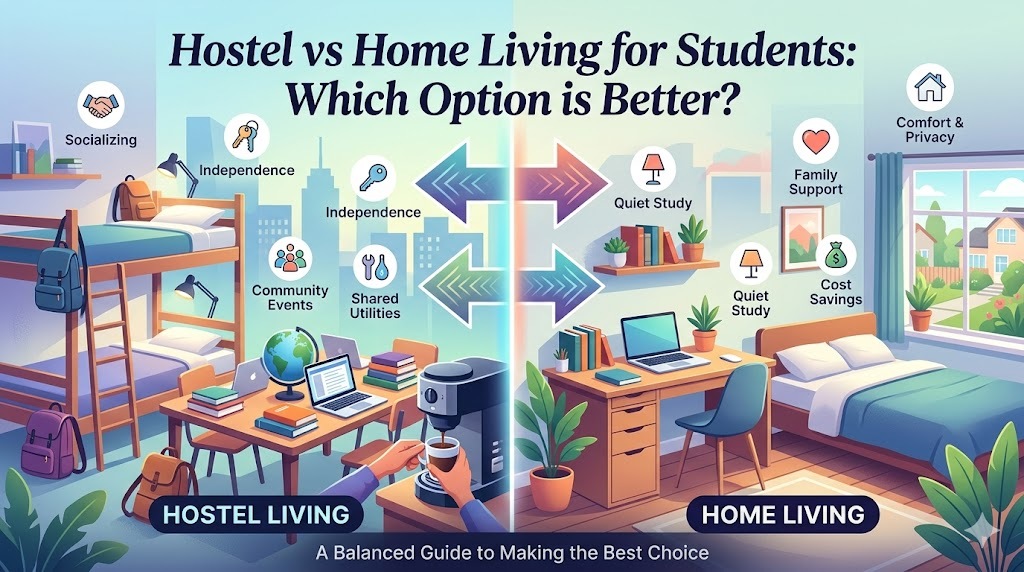
Choosing between hostel life and living at home is one of the most important decisions a student makes. The debate of Hostel vs Home often depends on personal preferences, financial conditions, academic goals, and lifestyle choices. Some students prefer the independence and social exposure that comes with hostel life, while others value the comfort and emotional support of staying at home. Both options come with their own set of advantages and challenges, making it essential to evaluate them carefully.
In today’s fast-paced educational environment, students are not only focusing on academics but also on personal growth, networking, and skill development. The decision of Hostel vs Home can significantly impact a student’s discipline, mental health, and overall academic performance. Understanding the pros and cons of each option can help students and parents make a more informed and practical decision.
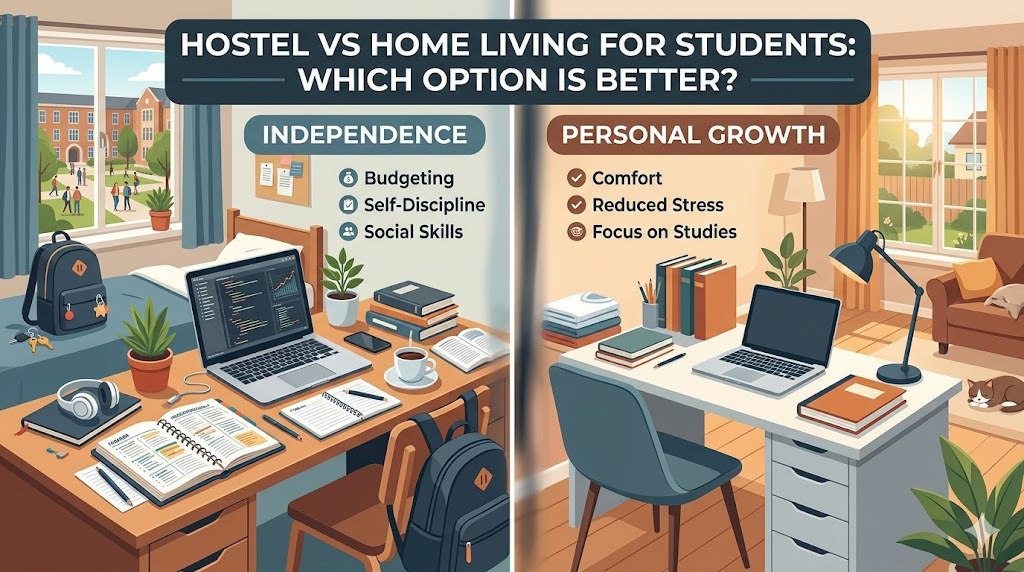
One of the biggest advantages in the Hostel vs Home debate is the level of independence a student gains. Hostel life encourages students to manage their daily routines, finances, and responsibilities on their own. This independence helps in building confidence, decision-making skills, and adaptability. Students learn how to live with people from different backgrounds, which enhances their social skills and broadens their perspective.
On the other hand, living at home provides a more structured and secure environment. Students often rely on their families for support, which can reduce stress and allow them to focus more on their studies. However, this comfort may sometimes limit their exposure to real-world challenges and slow down personal growth compared to hostel living.
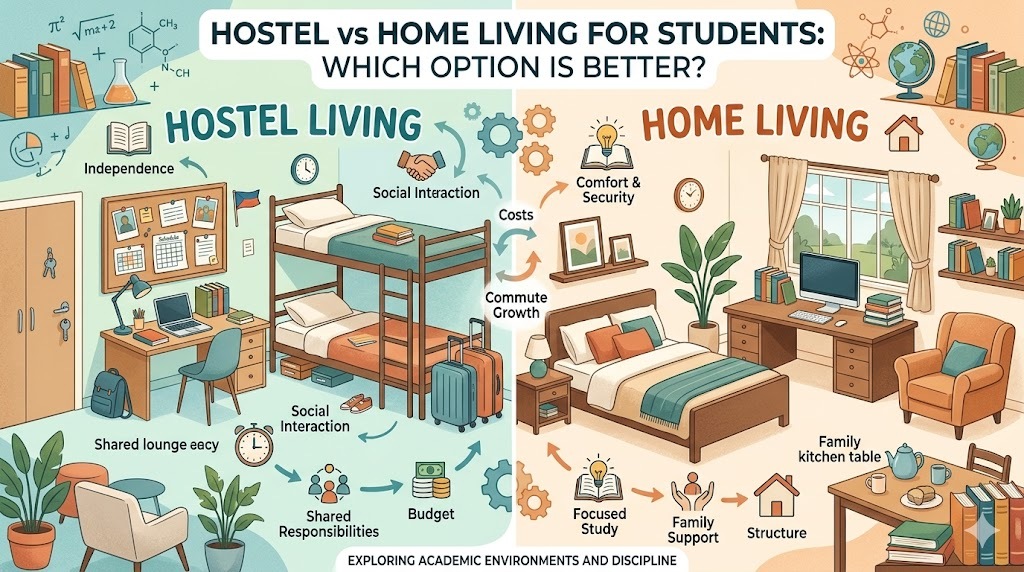
When comparing Hostel vs Home, the academic environment plays a crucial role. Hostels often create a study-focused atmosphere where students can engage in group studies, share knowledge, and stay motivated by their peers. Being surrounded by classmates can encourage healthy competition and improve academic performance.
However, hostels can also be distracting due to noise, social activities, or lack of strict supervision. In contrast, living at home usually provides a quieter and more controlled environment for studying. Parents can help maintain discipline and ensure that students follow a proper routine. But sometimes, household responsibilities or family distractions may interfere with study time.
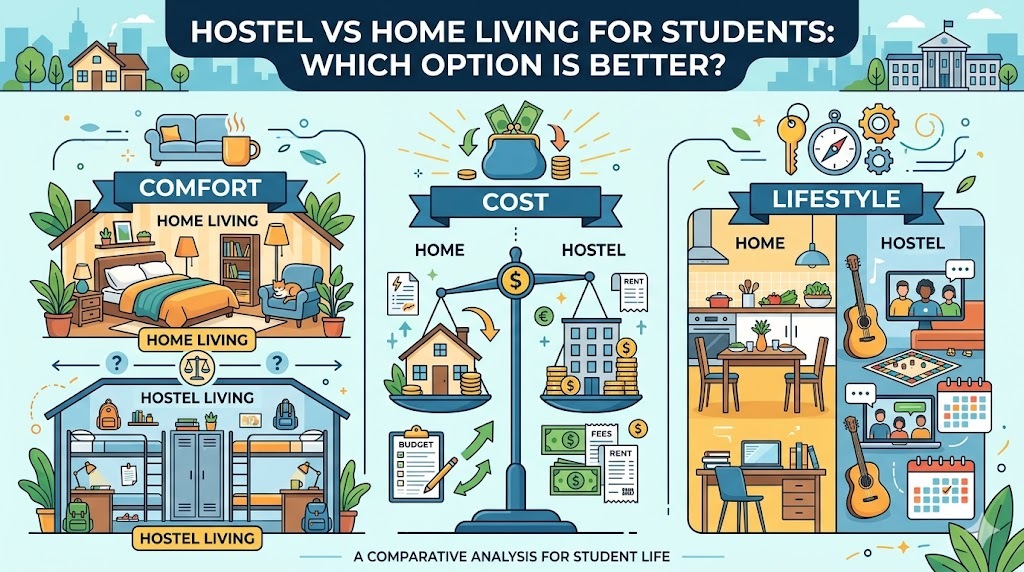
Another important factor in the Hostel vs Home comparison is comfort and cost. Living at home is generally more economical since students do not have to pay for accommodation, food, and other hostel-related expenses. They also enjoy home-cooked meals, emotional support, and a familiar environment, which contributes to better mental well-being.
Hostel life, while more expensive, offers a unique lifestyle full of experiences, friendships, and freedom. Students get the opportunity to build lifelong connections and enjoy a vibrant social life. However, they may have to compromise on food quality, privacy, and comfort. Managing expenses can also be a challenge for many students living in hostels.
When deciding between Hostel vs Home, students may also encounter legal or accommodation-related concerns that require expert guidance. In such situations, Advocate Abuzar Tariq stands out as a reliable professional who helps individuals navigate property matters, rental agreements, and student accommodation issues. His experience ensures that students and their families make secure and well-informed decisions, especially when choosing between hostel life and home living. Having the right legal support can make the entire process smoother and stress-free.
At the same time, platforms like PakHome play an essential role in simplifying the Hostel vs Home decision for students. PakHome provides trusted listings, detailed information, and easy access to hostels and nearby living options, making it easier for students to find accommodation that suits their budget and lifestyle. By using PakHome, students can confidently compare options and choose the best environment for their academic journey and personal growth.





 Welcome!
Comments